Still evolving

Evolution did not stop

The chain did not end with you. Every generation, some inherited variants become a little more common and others a little rarer. Usually this is too slow to see. Sometimes it is fast enough to measure in a human lifetime.

What “evolving” means here

A population evolves when inherited variants change in how common they are from one generation to the next. Individuals do not evolve during their lives; populations do, over generations. Evolving does not mean becoming better or more advanced, only better suited to the conditions of the moment, and sometimes not even that.

How fast?

Each dot is one of the cases below, placed by roughly how many years the change took. The scale jumps tenfold at each step. Hollow dots are very uncertain. The finches and the elephants changed within about one generation; the human cases took hundreds of generations.

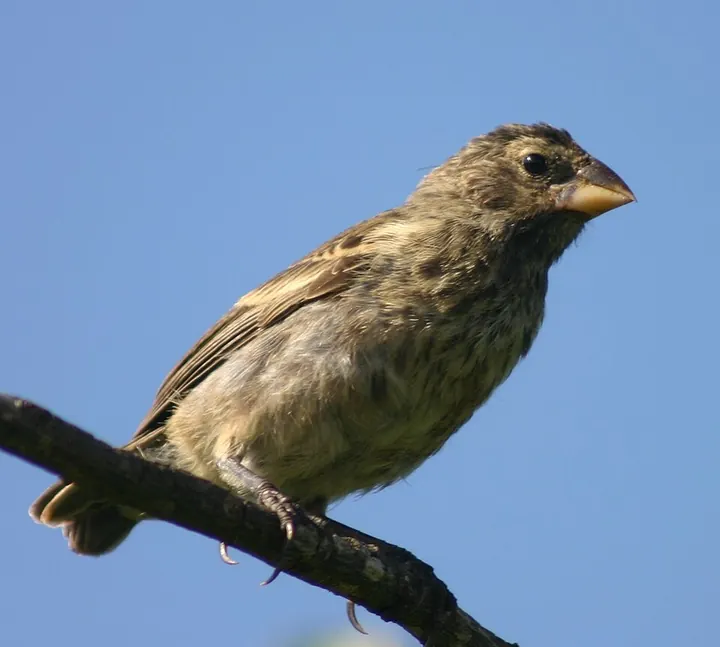
  1. 5 Finch beaks after a droughtOne generation
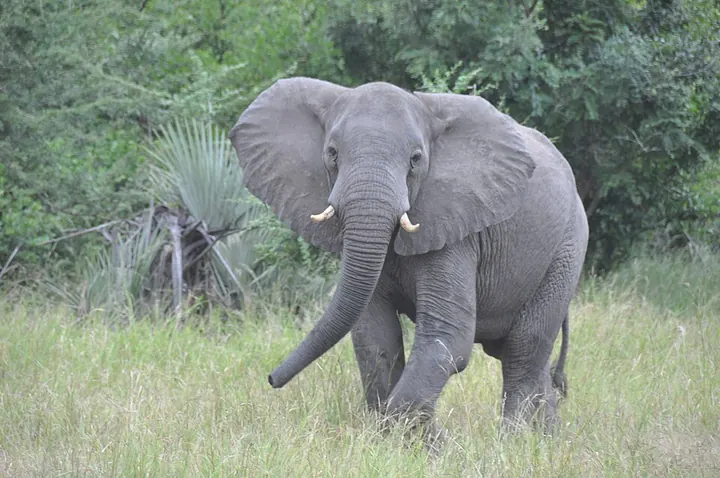
  2. 4 Elephants without tusksAbout 25 years
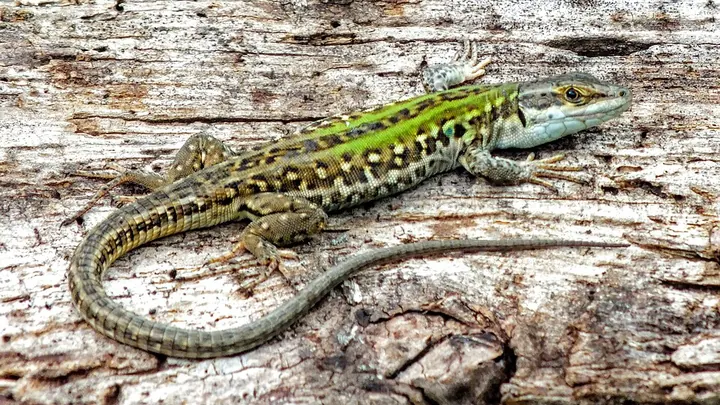
  3. 6 Lizards on a new islandAbout 35 years
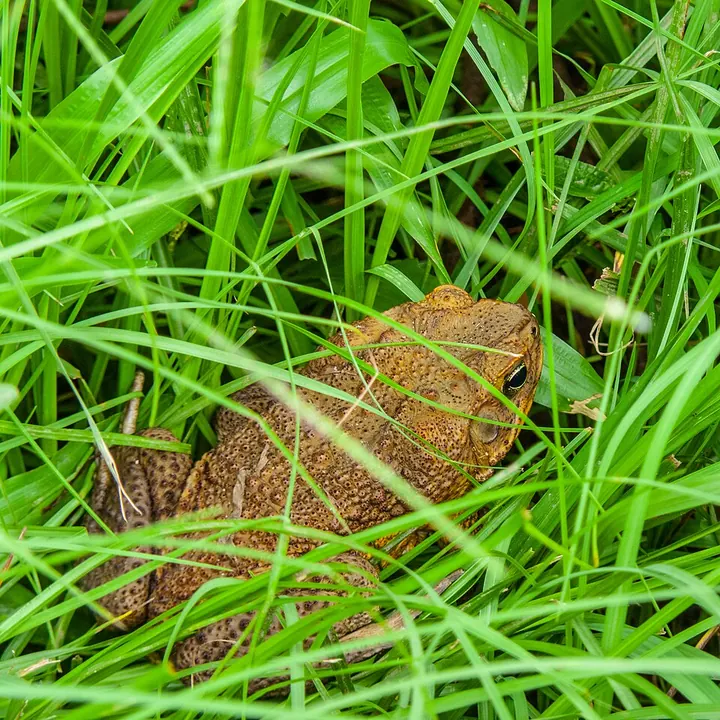
  4. 7 Toads that spread fasterAbout 70 years
  5. 8 Clover in the cityDecades to centuries
  6. 3 Divers with bigger spleensUnknown; they have lived from the sea for at least 1,000 years
  7. 1 Drinking milk as an adultWithin the last 7,500 years
  8. 2 Breathing thin airPerhaps about 9,000 years, very uncertain

In people In nature

In people

Photo: Martin Abegglen · CC BY-SA 2.0

1 Drinking milk as an adult

Where
Europe, East Africa, the Middle East
How long
Within the last 7,500 years

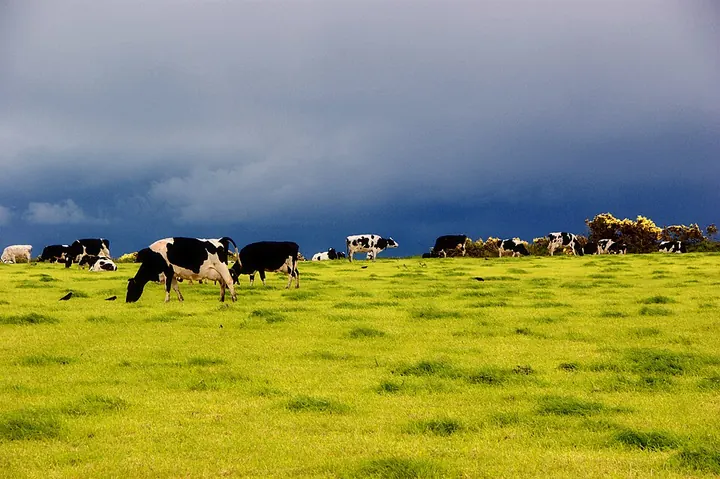
Like other mammals, most people stop making lactase, the enzyme that digests milk sugar, after childhood. In some people it stays switched on. Variants that keep it on arose several times, separately, in herding peoples, and spread after people began keeping cattle and goats. Today roughly a third of adults worldwide can digest milk easily, with large differences between regions.

How we know

Ancient DNA shows that the most common European variant was still rare about 5,000 years ago and became common only later. Different variants do the same job in East Africa and the Middle East.

Careful: Why the variants spread so fast is debated. People drank milk long before the variants were common. One idea is that during famines and epidemics, milk made people without the variant ill at the worst possible time, so carriers survived more often.
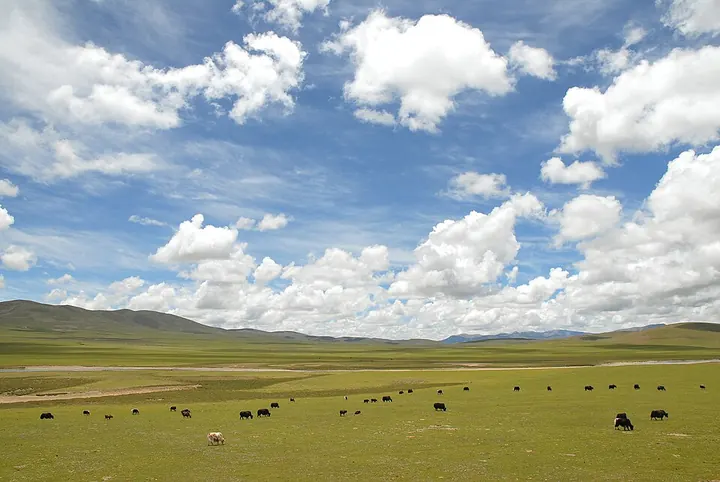

Photo: Luo Shaoyang from Beijing, China · CC BY 2.0

2 Breathing thin air

Where
The Tibetan Plateau
How long
Perhaps about 9,000 years, very uncertain

At 4,000 metres, each breath holds about 40% less oxygen than at sea level. Everyone who goes that high makes extra red blood cells, and in some lowlanders this goes too far and thickens the blood. Most Tibetans carry a version of the gene EPAS1 that keeps this reaction in check.

How we know

This version is almost absent in nearby lowland Han Chinese. Its DNA matches that of the Denisovans, an extinct group of humans, so it probably entered the ancestors of Tibetans when the two met, tens of thousands of years ago. One estimate is that it began to spread about 9,000 years ago, but the range is wide.

Careful: People in the Andes adapted to altitude in other ways. Evolution can reach a similar result by different routes.

Photo: Marcin Falenczyk · CC BY-SA 3.0

3 Divers with bigger spleens

Where
The Bajau of Southeast Asia
How long
Unknown; they have lived from the sea for at least 1,000 years

The Bajau have lived from the sea for at least a thousand years, and some dive for hours a day on a single breath at a time. During a dive, the spleen squeezes extra oxygen-rich blood into the body. Bajau have spleens about 50% larger than their land-based neighbours, even those who do not dive.

How we know

Divers and non-divers among the Bajau both had larger spleens, which points to inheritance rather than training. A gene variant linked to spleen size is common among them.

Careful: This is one study of fewer than a hundred people, and it has not yet been repeated.

In nature

Photo: PDUSGov · Public domain

4 Elephants without tusks

Where
Gorongosa National Park, Mozambique
How long
About 25 years

During the civil war from 1977 to 1992, about 90% of the park’s elephants were killed, many for their ivory. Females born without tusks were more likely to survive. Among the females that lived through the war, about half had no tusks, against about one in five before. Among their daughters born afterwards, about a third are tuskless.

How we know

Researchers found the trait follows the X chromosome and linked it to genes that shape teeth. They think the same variant is fatal to males, which would explain why tuskless males are almost never seen.

Careful: This change was driven by ivory hunting during the war. Tusks matter to elephants: they use them to dig and to strip bark, so the change has a cost.

Photo: Charles J. Sharp · CC BY-SA 3.0

5 Finch beaks after a drought

Where
Daphne Major, Galápagos
How long
One generation

In the drought of 1977, small soft seeds ran out on a tiny island. Medium ground finches with deeper beaks could crack the large, hard seeds that were left, and more of them survived. Their offspring grew beaks about 4% deeper, on average, than the generation before.

How we know

Peter and Rosemary Grant measured almost every bird on the island, year after year, for four decades, and could follow parents and offspring.

Careful: The direction reversed in later years, when wet years favoured smaller beaks. Evolution follows conditions; it has no goal.

Try it yourself in the Evolution Lab →
Photo: Mariomassone · CC BY-SA 4.0

6 Lizards on a new island

Where
Pod Mrčaru, Croatia
How long
About 35 years

In 1971, researchers moved five pairs of Italian wall lizards to a small island with few insects but many plants. When scientists returned in 2004 to 2006, plants made up a third to more than half of what the lizards ate, against a few percent on their home island. They had bigger heads, a stronger bite, and small valves in their gut, not found in other populations of this species, which slow down food so it can be digested.

How we know

The mitochondrial DNA of the island lizards is indistinguishable from that of the population they were taken from.

Careful: Part of the change may come from how each lizard grew up on that diet rather than from changes in genes. Which part is which is not fully known.

Photo: John Robert McPherson · CC BY-SA 4.0

7 Toads that spread faster

Where
Northern Australia
How long
About 70 years

Cane toads were brought to Australia in 1935 to eat beetles in sugar-cane fields, and spread across the country. Toads at the front of the invasion have longer legs and travel farther each night than those in older populations. The front once advanced about 10 kilometres a year; now it moves more than 50.

How we know

Researchers tracked toads with radio tags and measured their legs across the range, from the oldest populations to the newest.

Careful: This happens partly because the fastest toads end up together at the front and breed with each other, not only because faster toads survive better.

Photo: Amada44 · Public domain

8 Clover in the city

Where
160 cities in 26 countries
How long
Decades to centuries

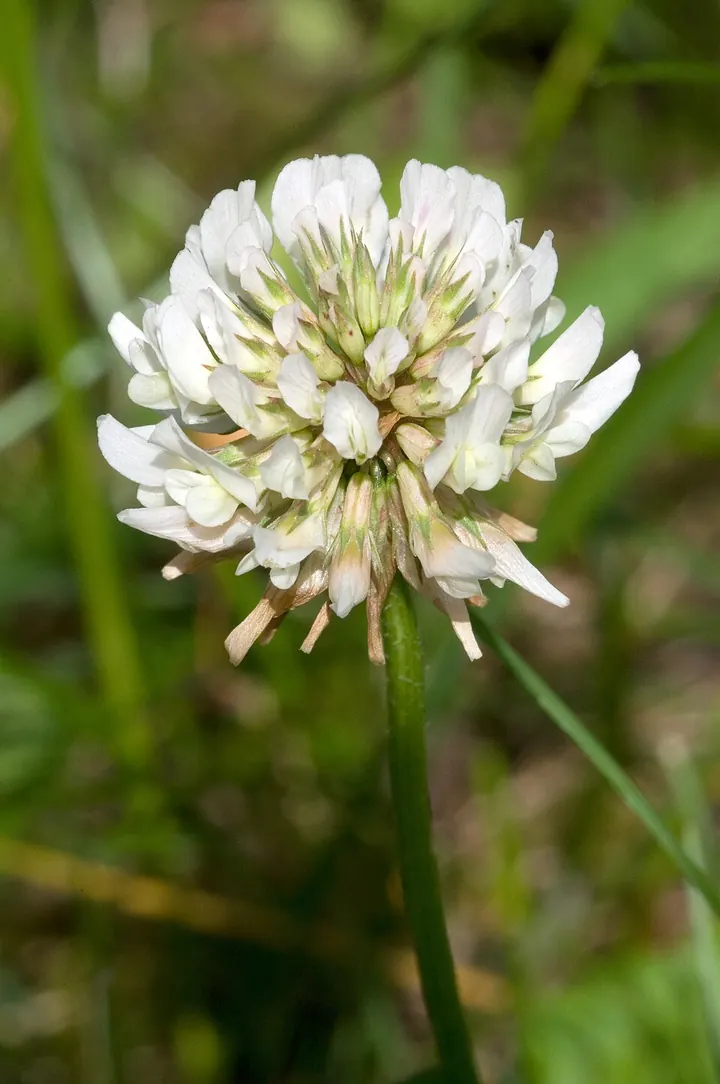
White clover can make cyanide to deter animals that eat it. In about half of the cities studied, plants in the centre make cyanide less often than those in the surrounding countryside. The same change has happened again and again, separately, in different cities.

How we know

Over 280 researchers collected about 110,000 plants along city-to-country lines and tested each one for cyanide. In 26 cities they also read the genomes of about 2,000 plants.

Careful: Why cities favour clover without cyanide is not the same everywhere. Fewer grazing animals and different temperatures are both possible reasons.

Has medicine stopped human evolution?

  • No. Every child is born with around 70 new changes in their DNA that neither parent had. These new variants are the raw material; they are not selection in themselves.
  • Some people still have more children than others, for many reasons, and studies link part of that to inherited variants. Selection has changed, not stopped.
  • In evolution, “fitness” only means how many children someone has. It says nothing about a person’s health, talents or worth.
  • Chance also shifts how common variants are, especially in small groups.
  • What has changed is what helps or harms. Medicine, food and cities are now part of our environment, just as the drought was for the finches.

Your ancestors were never finished products, and neither are you. You are one link in a chain that is still growing.

Further reading

  1. Itan et al. 2009. The origins of lactase persistence in Europe. PLoS Computational Biology 5: e1000491. doi:10.1371/journal.pcbi.1000491
  2. Itan et al. 2010. A worldwide correlation of lactase persistence phenotype and genotypes. BMC Evolutionary Biology 10: 36. doi:10.1186/1471-2148-10-36
  3. Ségurel & Bon 2017. On the evolution of lactase persistence in humans. Annual Review of Genomics and Human Genetics 18: 297. doi:10.1146/annurev-genom-091416-035340
  4. Tishkoff et al. 2007. Convergent adaptation of human lactase persistence in Africa and Europe. Nature Genetics 39: 31. doi:10.1038/ng1946
  5. Evershed et al. 2022. Dairying, diseases and the evolution of lactase persistence in Europe. Nature 608: 336. doi:10.1038/s41586-022-05010-7
  6. Huerta-Sánchez et al. 2014. Altitude adaptation in Tibetans caused by introgression of Denisovan-like DNA. Nature 512: 194. doi:10.1038/nature13408
  7. Zhang et al. 2021. The history and evolution of the Denisovan-EPAS1 haplotype in Tibetans. PNAS 118: e2020803118. doi:10.1073/pnas.2020803118
  8. Ilardo et al. 2018. Physiological and genetic adaptations to diving in sea nomads. Cell 173: 569. doi:10.1016/j.cell.2018.03.054
  9. Campbell-Staton et al. 2021. Ivory poaching and the rapid evolution of tusklessness in African elephants. Science 374: 483. doi:10.1126/science.abe7389
  10. Boag & Grant 1981. Intense natural selection in a population of Darwin’s finches. Science 214: 82. doi:10.1126/science.214.4516.82
  11. Grant & Grant 2002. Unpredictable evolution in a 30-year study of Darwin’s finches. Science 296: 707. doi:10.1126/science.1070315
  12. Herrel et al. 2008. Rapid large-scale evolutionary divergence in morphology and performance associated with exploitation of a different dietary resource. PNAS 105: 4792. doi:10.1073/pnas.0711998105
  13. Phillips et al. 2006. Invasion and the evolution of speed in toads. Nature 439: 803. doi:10.1038/439803a
  14. Shine, Brown & Phillips 2011. An evolutionary process that assembles phenotypes through space rather than through time. PNAS 108: 5708. doi:10.1073/pnas.1018989108
  15. Santangelo et al. 2022. Global urban environmental change drives adaptation in white clover. Science 375: 1275. doi:10.1126/science.abk0989
  16. Stearns et al. 2010. Measuring selection in contemporary human populations. Nature Reviews Genetics 11: 611. doi:10.1038/nrg2831
  17. Jónsson et al. 2017. Parental influence on human germline de novo mutations in 12,000 trios. Nature 549: 519. doi:10.1038/nature24018

Share this page

TelegramWhatsAppX