Animal Minds

Other minds

Intelligence is not a ladder with humans at the top. It is a bush. Evolution built clever minds again and again, on separate branches of the tree of life, each tuned to a different world. Some of these minds may be doing things we have not yet learned to recognise.

Built four times, from scratch

Complex minds did not evolve once. They arose independently on at least four branches. The further back your shared ancestor, the more alien the mind.

  1. Primates

    Big brains, clever hands and complex social lives in the trees. Your own branch.

    your branch

  2. Whales and dolphins

    Their large brains evolved in the sea, separately from ours, after their ancestors left the land.

    shared ancestor with you: 90 million years ago

  3. Crows and parrots

    A bird forebrain is built in clusters instead of layers, yet it packs neurons more densely than a primate brain of the same size.

    shared ancestor with you: 319 million years ago

  4. Octopuses

    An invertebrate path to a complex mind. Their ancestor and yours probably had only a simple nervous system.

    shared ancestor with you: 721 million years ago

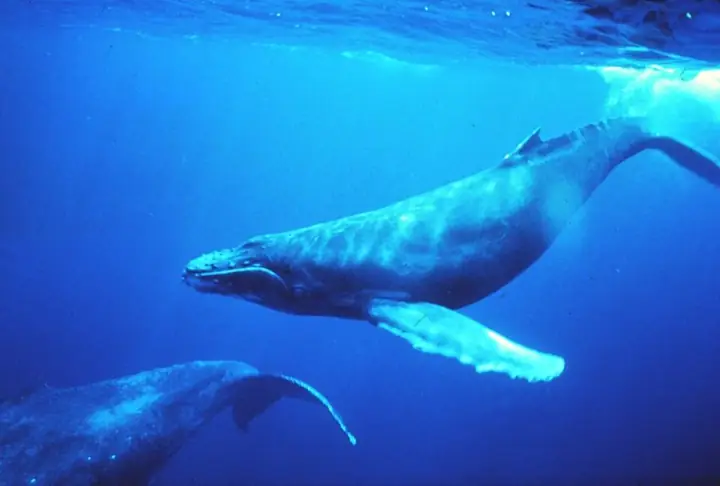
Humpback whale
Photo: Dr. Louis M. Herman. · Public domain
  • Teamwork
  • Culture
  • Communication

Humpback whale Megaptera novaeangliae

Hunt as a team with nets made of bubbles

In Alaska, groups of humpbacks hunt herring together. One whale swims in a rising spiral beneath the fish, releasing a curtain of bubbles that traps them, while others call loudly and drive the school together. Then the whole group surges up through the middle with mouths open.
Shared ancestor with you: 90 million years ago

Studies (1)
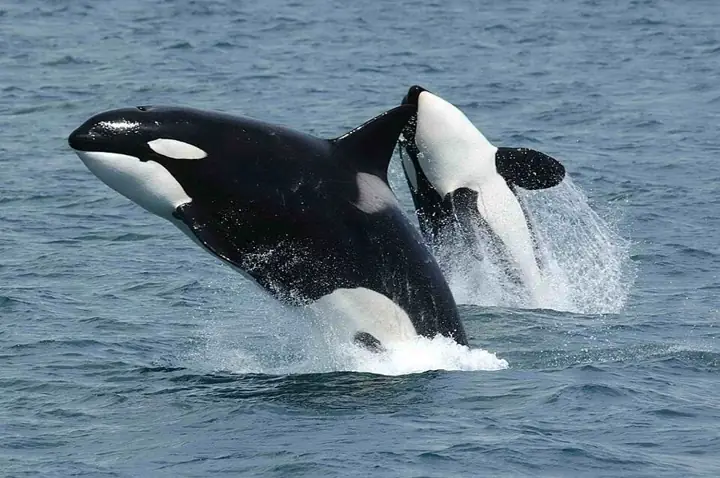
Orca
Photo: Robert Pittman · Public domain
  • Teamwork
  • Culture

Orca Orcinus orca

Grandmothers lead the family

Orca families are led by mothers and grandmothers, and different populations keep their own dialects and hunting traditions: some eat only fish, others hunt seals. In one well-studied population, females who no longer reproduce lead the group’s movements, especially in years when salmon are scarce. Their knowledge of where to find food helps their relatives survive.

Shared ancestor with you: 90 million years ago

Studies (1)
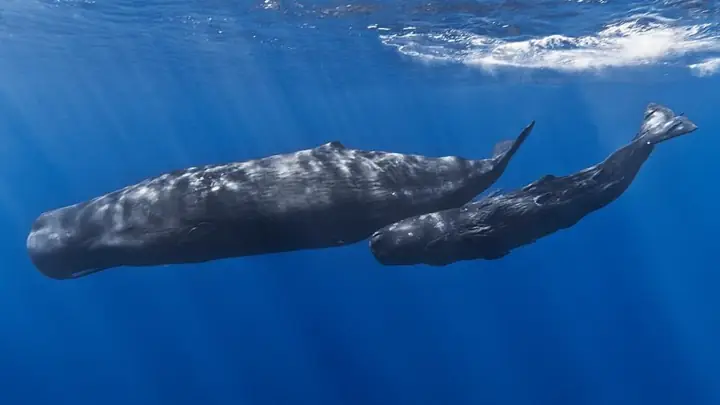
Sperm whale
Photo: Gabriel Barathieu · CC BY-SA 2.0
  • Communication
  • Culture

Sperm whale Physeter macrocephalus

A language we cannot read yet

Sperm whales communicate in codas: short patterns of clicks. Families belong to vocal clans with their own dialects. In 2024, a team analysing 8,719 codas found that rhythm, tempo and two newly described features, which they called rubato and ornamentation, combine freely. The result is a kind of “phonetic alphabet” that could produce an enormous repertoire.

Shared ancestor with you: 90 million years ago

Studies (1)
Bottlenose dolphin
Photo: NASA · Public domain
  • Communication
  • Self-awareness
  • Tool use
  • Culture

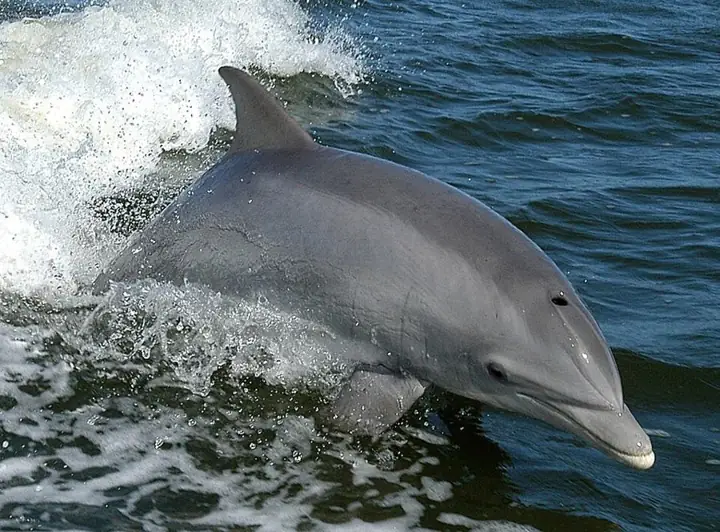
Bottlenose dolphin Tursiops truncatus

They call each other by name

Each bottlenose dolphin develops its own signature whistle. Wild dolphins sometimes copy the signature whistle of a particular companion, and the dolphin whose whistle was copied answers. This suggests they use whistles as labels to address one another. Dolphins also recognise themselves in a mirror.

Shared ancestor with you: 90 million years ago

Studies (3)
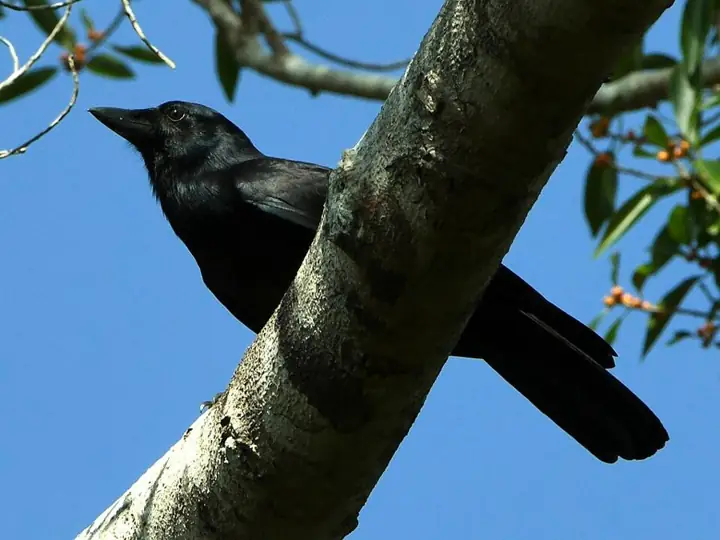
New Caledonian crow
Photo: benkeen · CC0
  • Tool use

New Caledonian crow Corvus moneduloides

Toolmakers of the forest

These crows shape twigs into hooked tools and cut leaves into barbed probes to pull insects out of holes. In experiments, some crows assembled tools from two, three, even four separate parts to reach food that was otherwise out of reach. Until then, building compound tools had been seen only in humans and great apes.

Shared ancestor with you: 319 million years ago

Studies (1)
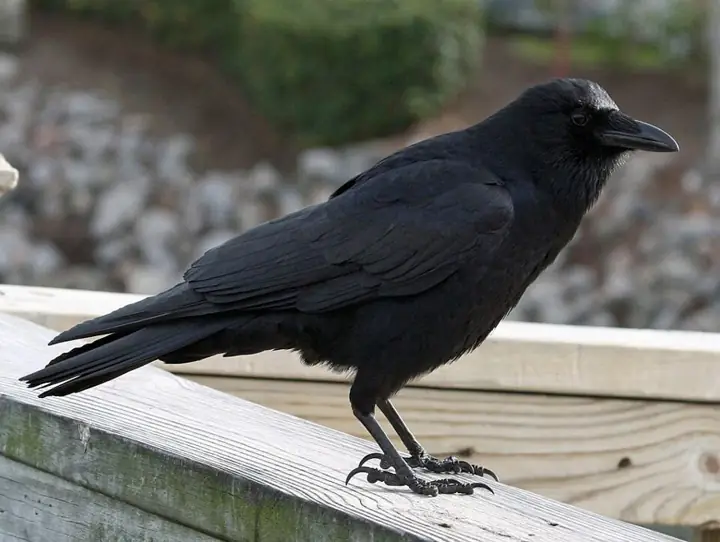
American crow
Photo: DickDaniels (http://carolinabirds.org/) · CC BY-SA 3.0
  • Memory
  • Culture
  • Communication

American crow Corvus brachyrhynchos

They never forget a face

Researchers in Seattle wore a particular mask while trapping and ringing crows. For years afterwards, crows scolded and mobbed anyone wearing that mask while ignoring a neutral one. Crows that had never been trapped joined in, so the knowledge spread through the population.

Shared ancestor with you: 319 million years ago

Studies (1)
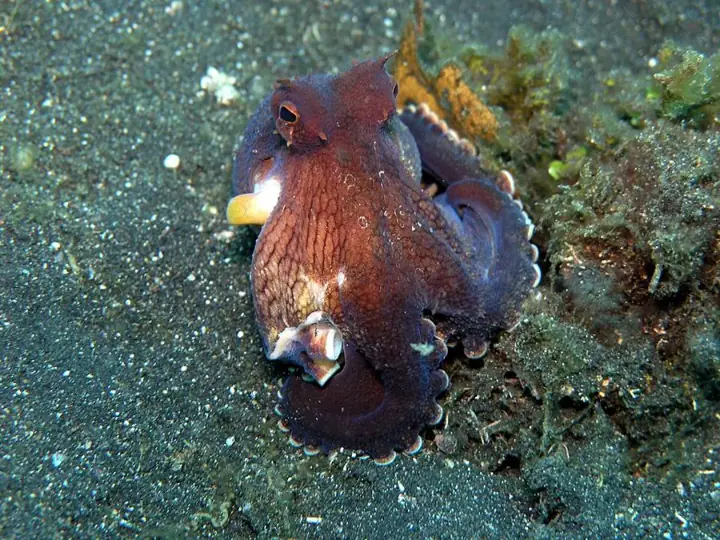
Coconut octopus
Photo: Jens Petersen · CC BY 2.5
  • Tool use

Coconut octopus Amphioctopus marginatus

Carries its house for later

Veined octopuses in Indonesia collect discarded coconut shell halves, stack them and carry them awkwardly across the seafloor on stretched-out arms, then assemble them into a shelter when needed. Carrying something now for use later is tool use. It was the first report of it in an invertebrate.

Shared ancestor with you: 721 million years ago

Studies (2)
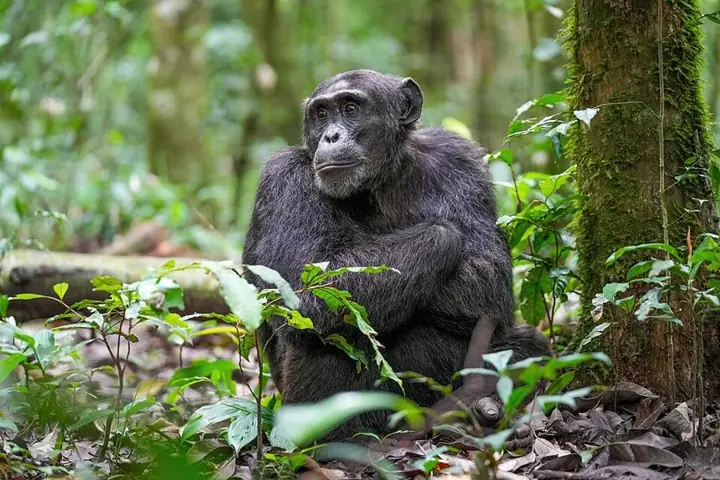
Chimpanzee
Photo: Giles Laurent · CC BY-SA 4.0
  • Memory
  • Tool use
  • Culture

Chimpanzee Pan troglodytes

Beat humans at a memory game

The numerals 1 to 9 flash on a screen and turn into blank squares, and the task is to touch them in order. When the numbers were shown for only about a fifth of a second, a young chimpanzee named Ayumu did this more accurately than university students.

Shared ancestor with you: 6.5 million years ago

Studies (2)
Elephant
Photo: Yathin S Krishnappa · CC BY-SA 3.0
  • Self-awareness
  • Memory

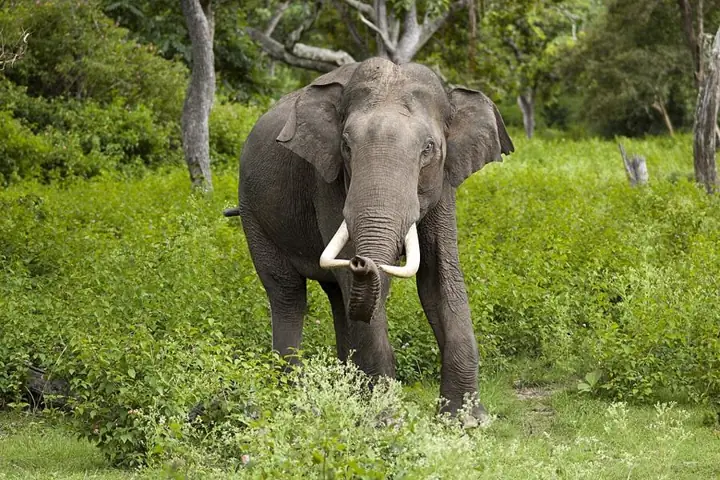
Elephant Elephas maximus

Recognise themselves, and linger over their dead

An Asian elephant named Happy repeatedly touched a mark on her head that she could only see in a mirror, the classic test of self-recognition. Wild African elephants show striking interest in the skulls and ivory of other elephants, touching and smelling them far more than the bones of other species.

Shared ancestor with you: 97 million years ago

Studies (2)
African grey parrot
Photo: Florettesokeng · CC BY-SA 4.0
  • Communication

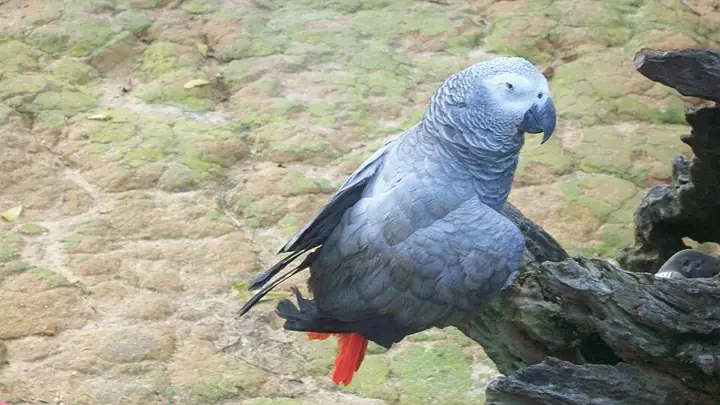
African grey parrot Psittacus erithacus

Alex understood “same” and “different”

For 30 years, Irene Pepperberg studied an African grey parrot named Alex. He could name around 50 objects, seven colours and five shapes, count small groups of objects, and answer questions such as “What’s same?” and “What’s different?” about two objects.

Shared ancestor with you: 319 million years ago

Studies (1)
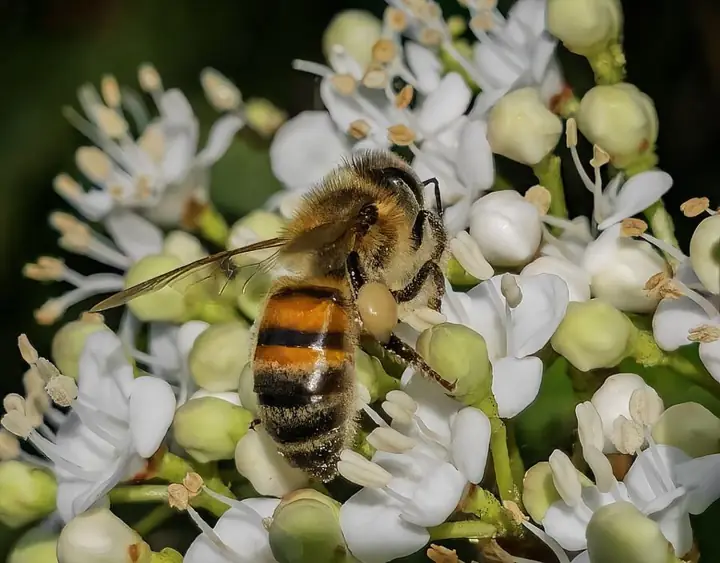
Honeybee
Photo: Didier Descouens · CC BY-SA 4.0
  • Communication
  • Teamwork

Honeybee Apis mellifera

Dance a map

A forager back at the hive performs a waggle dance. The angle of the dance shows the direction of the food relative to the sun, and the length of the waggle shows the distance. Karl von Frisch decoded this language and shared the 1973 Nobel Prize for it.

Shared ancestor with you: 721 million years ago

Studies (1)
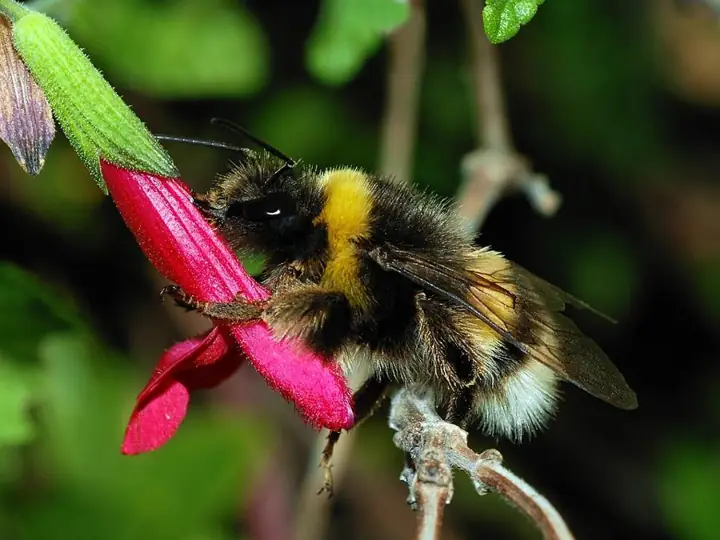
Bumblebee
Photo: Alvesgaspar · CC BY-SA 3.0
  • Play
  • Culture

Bumblebee Bombus terrestris

Learn by watching, and play

Bumblebees learned to roll a ball into a goal for a sugar reward after watching a trained bee do it. Then they improved on what they had seen, choosing the closest ball instead of the one used in the demonstration.

Shared ancestor with you: 721 million years ago

Studies (2)
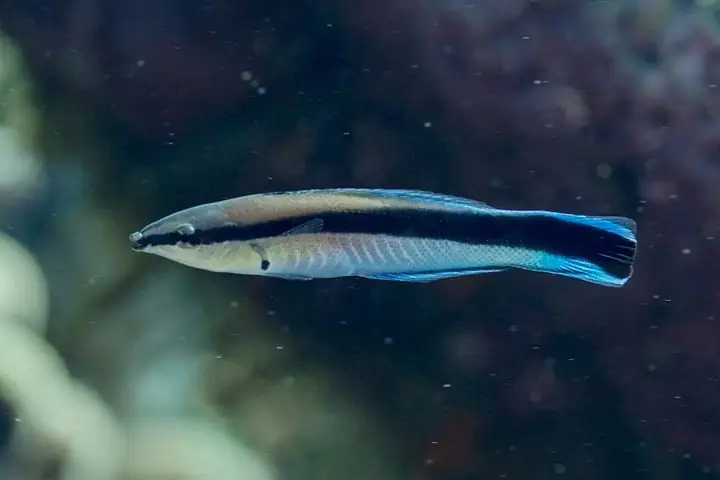
Cleaner wrasse
Photo: Diego Delso · CC BY-SA 4.0
  • Self-awareness

Cleaner wrasse Labroides dimidiatus

A fish that may recognise itself

Cleaner wrasses given a mirror stopped attacking their reflection, then tried to scrape off a coloured mark placed where they could only see it in the mirror. Some scientists count this as passing the mirror test; others, including the test’s inventor, dispute it. The debate itself shows how hard it is to measure another mind.

Shared ancestor with you: 435 million years ago

Studies (1)
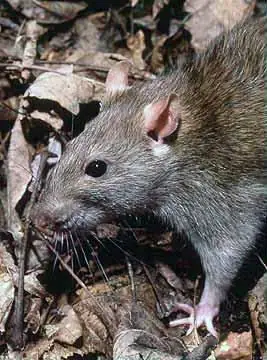
Rat
Photo: National Park Service · Public domain
  • Play

Rat Rattus norvegicus

Plays hide-and-seek, and laughs

Rats in Berlin learned to play hide-and-seek with researchers, both hiding and seeking. Their only reward was playful tickling. While hiding they stayed quiet, and they chirped with excitement when they found the researcher or were found.

Shared ancestor with you: 84 million years ago

Studies (2)
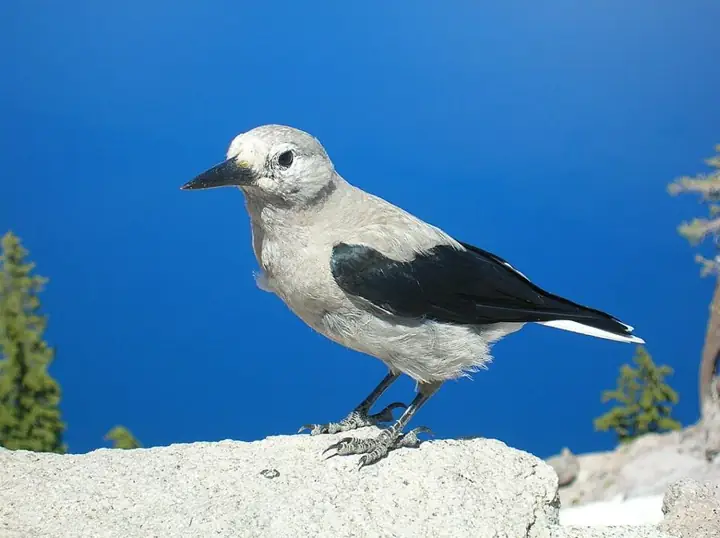
Clark’s nutcracker
Photo: Oregon Department of Fish & Wildlife · CC BY-SA 2.0
  • Memory

Clark’s nutcracker Nucifraga columbiana

Remembers thousands of hiding places

Each autumn a Clark’s nutcracker buries tens of thousands of pine seeds in thousands of small caches across the landscape, then finds many of them again months later, often under snow.

Shared ancestor with you: 319 million years ago

Studies (1)
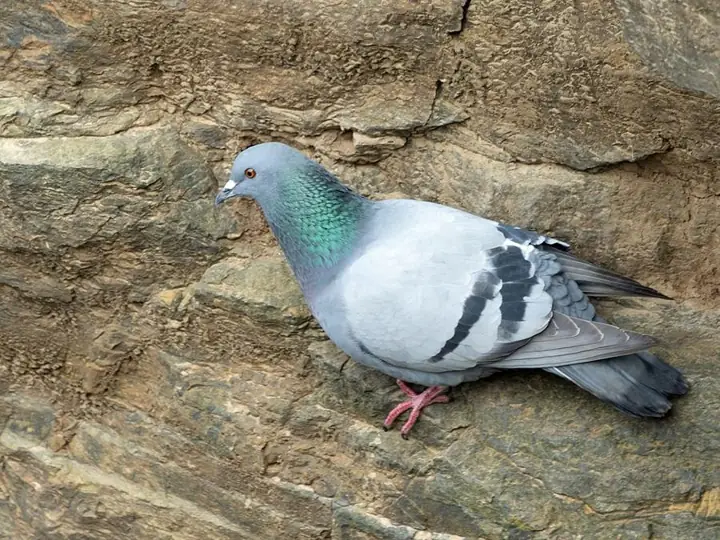
Pigeon
Photo: william_stephens · CC BY 4.0
  • Memory

Pigeon Columba livia

Can tell Monet from Picasso

In a 1995 study, pigeons learned to tell paintings by Monet from paintings by Picasso, then correctly sorted works by the same artists they had never seen. They even generalised: Cézanne and Renoir went with Monet, Braque and Matisse with Picasso.

Shared ancestor with you: 319 million years ago

Studies (1)

Counting neurons

Neurons in the cerebral cortex (in birds, the pallium), the part of the brain where much flexible thinking happens. More neurons is not the same as more intelligence, but it raises a real question: what are all those neurons doing?

  1. Long-finned pilot whale37.2 billion↗
  2. You (human)16.3 billion↗
  3. African elephant5.6 billion↗
  4. Raven1.2 billion↗
  5. Dog0.53 billion↗
  6. Cat0.25 billion↗

Are some animals smarter than us?

It depends on what you mean by “smart”, and that is exactly the point. Here is what science can say, and where it has to stop.

What we know

There is no single scale of intelligence. Every species is shaped by the problems its ancestors had to solve, and many beat us at specific tasks: chimpanzees at flash memory, nutcrackers at remembering places, bees at navigating by polarised light.

So far, no other animal has been shown to have a language like ours, able to combine words into unlimited new meanings, or a culture that builds up over thousands of generations the way human knowledge does.

What we don’t know

A long-finned pilot whale has more than twice as many neurons in its cortex as you do. We do not know what it does with them.

Sperm whale codas have a structure we are only beginning to describe. Projects such as Project CETI and the Earth Species Project are using recordings and machine learning to try to understand animal communication.

Every animal lives in its own sensory world, which scientists call its Umwelt: bats hear in echoes, sharks sense electric fields, bees see ultraviolet. A mind built around senses we lack may be intelligent in ways our tests cannot see.

Scientists are careful here for a reason. It is easy to read human feelings into animals, and just as easy to underestimate them. That tension is what makes this field so exciting.

Follow the research:Project CETI ↗Earth Species Project ↗Umwelt ↗Animal cognition ↗

Who did it?

Six real findings. Can you guess the animal?

Share this page

TelegramWhatsAppX