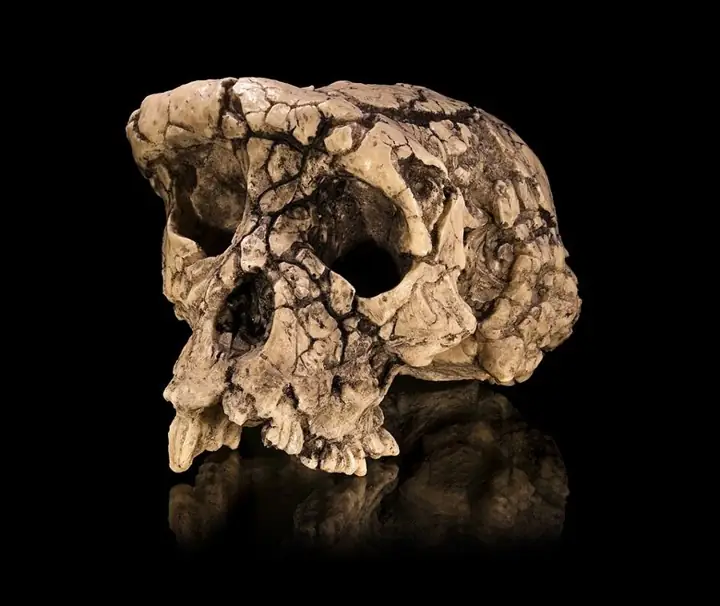
“Toumaï”, Chad
Sahelanthropus
One of the oldest known possible members of the human line, close to the time our ancestors split from those of chimpanzees. Whether it walked upright is still debated.
On iPhone: tap the Share button, then “Add to Home Screen”.
The last seven million years
For most of the last few hundred thousand years, we were not alone. Several kinds of humans walked the Earth at the same time, met, and sometimes had children together. Today only one remains: us. This is the story of how we got here.
Each bar shows the time span from which we have fossils or other evidence of a species. Tap a species to learn more.
“Toumaï”, Chad
One of the oldest known possible members of the human line, close to the time our ancestors split from those of chimpanzees. Whether it walked upright is still debated.
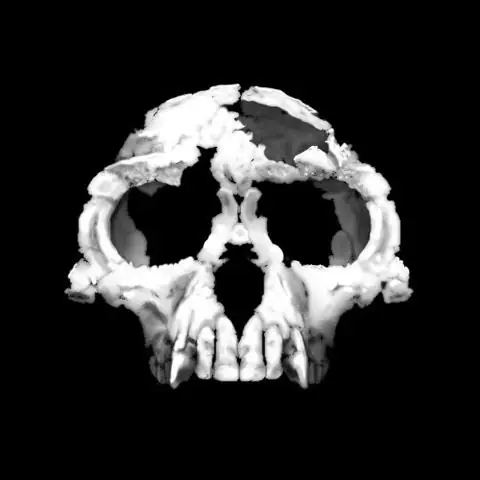
“Ardi”, Ethiopia
A partial skeleton 4.4 million years old shows a creature that could walk upright on the ground and still climb well in trees.
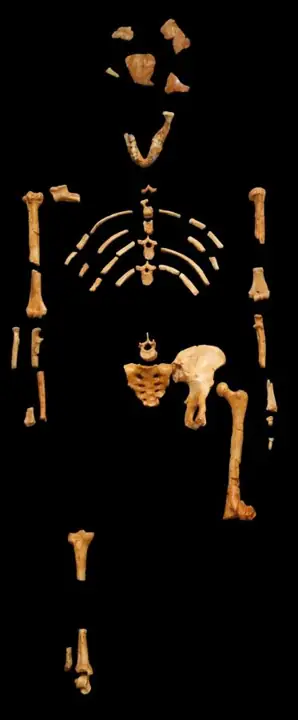
“Lucy”, Ethiopia
Lucy’s species walked upright with a brain about the size of a chimpanzee’s. At Laetoli, in Tanzania, its footprints were preserved in volcanic ash 3.66 million years ago.
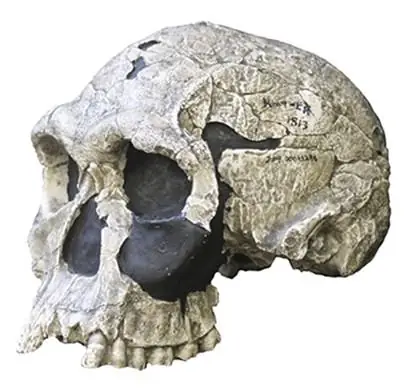
“handy man”
An early member of our own genus, with a somewhat larger brain, often found together with simple stone tools.
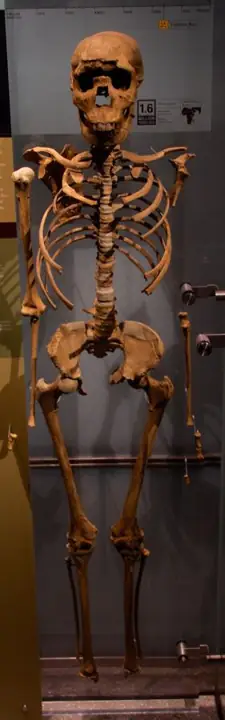
“Turkana Boy”, Kenya
The great traveller: the first humans with body proportions like ours spread from Africa across Asia. The species survived on Java until about 108,000 years ago, more than 1.7 million years in all.
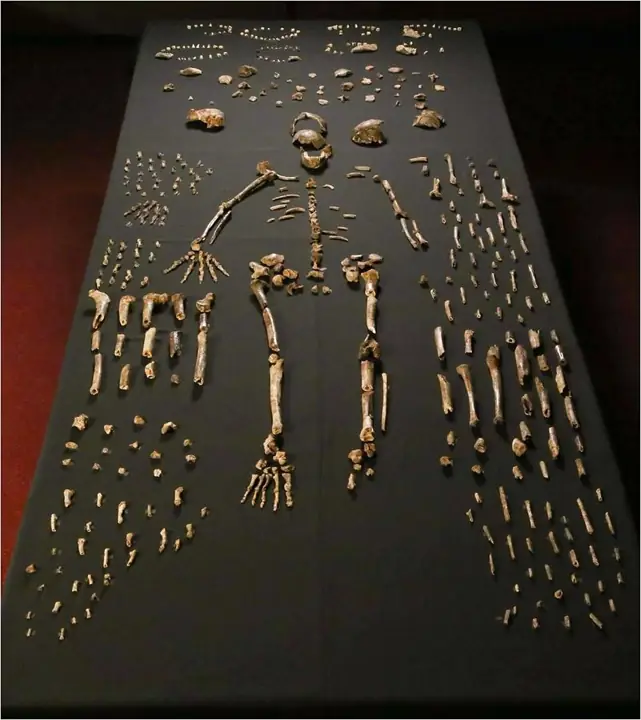
Rising Star Cave, South Africa
Small-brained and surprisingly recent: its bones, found deep inside a cave system, are 236,000 to 335,000 years old, so it lived at the same time as early members of our species.
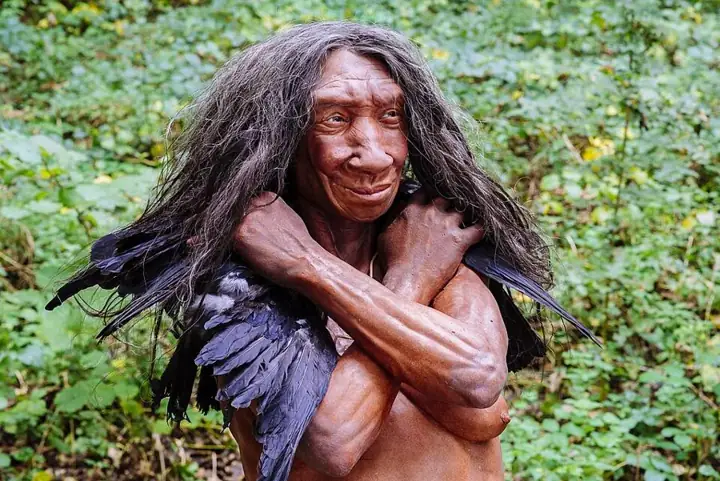
Europe and western Asia
Strong, big-brained people of Ice Age Europe and Asia who made tools, used fire and buried some of their dead. They disappeared about 40,000 years ago, but part of their DNA lives on in us.
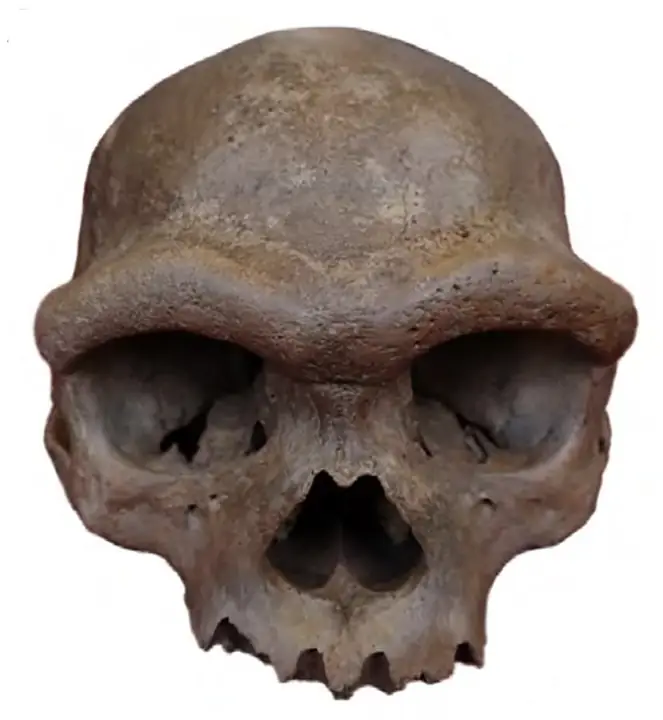
Siberia to Tibet and China
First discovered in 2010 from DNA in a tiny finger bone. In 2025 a 146,000-year-old skull from Harbin, China, was shown to be Denisovan, finally giving them a face.
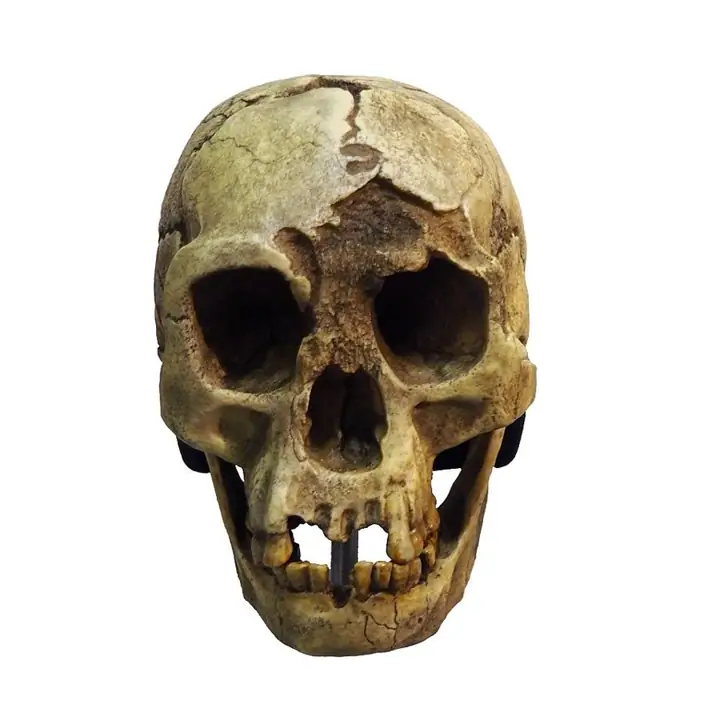
“the hobbit”, Flores
Adults stood about a metre tall. They lived on the Indonesian island of Flores; their bones are about 60,000 to 100,000 years old.
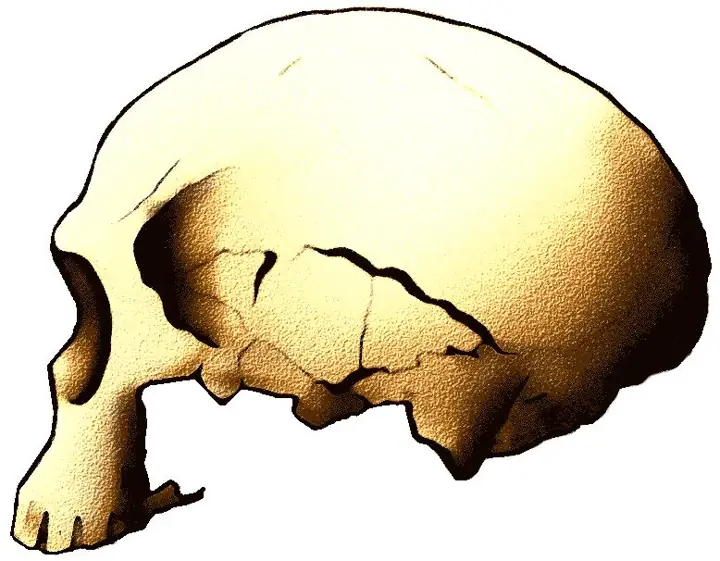
us
The oldest known fossils of our species, from Jebel Irhoud in Morocco, are about 300,000 years old. We are the last surviving human species.
Around 50,000 years ago, several kinds of humans were still alive: us, the Neanderthals, the Denisovans and probably the people of Flores. Today, only one is left.
Drag the slider through time. Our species arose in Africa; small groups later left and, generation after generation, reached every continent except Antarctica. Other human species appear on the map while they were still alive.
Routes are simplified; real migrations were many small movements over thousands of years, and some dates are still debated.
Studies: Clarkson et al. 2017, Nature ↗Hublin et al. 2020, Nature ↗Bennett et al. 2021, Science ↗Pigati et al. 2023, Science ↗
When our ancestors met Neanderthals and Denisovans, they sometimes had children together. Most of the Neanderthal mixing happened in one long period around 47,000 years ago. Its traces are still in our DNA today.
If most of your ancestors came from:
Studies: Green et al. 2010, Science ↗Reich et al. 2010, Nature ↗Prüfer et al. 2014, Nature ↗Iasi et al. 2024, Science ↗Huerta-Sánchez et al. 2014, Nature ↗
Not one big leap, but many small steps, taken over millions of years.
3.66 million years ago
Footprints at Laetoli, Tanzania, show that our relatives walked on two legs 3.66 million years ago.
Leakey & Hay 1979, Nature ↗3.3 million years ago
Stone tools from Lomekwi, Kenya, are 3.3 million years old: older than our own genus.
Harmand et al. 2015, Nature ↗1 million years ago
Ash and burnt bone in Wonderwerk Cave, South Africa, show controlled fire about a million years ago.
Berna et al. 2012, PNAS ↗300 thousand years ago
Homo sapiens appears in Africa by about 300,000 years ago.
Hublin et al. 2017, Nature ↗51.2 thousand years ago
A cave painting on Sulawesi showing figures and a wild pig is at least 51,200 years old: the oldest known visual story.
Oktaviana et al. 2024, Nature ↗12 thousand years ago
About 12,000 years ago people began to farm, and the human population started to grow fast.
Neolithic Revolution ↗Approximate average volumes; ranges overlap widely. Bigger is not simply better: Neanderthal brains were slightly larger than ours. Brain size ↗
Hi, I’m Luca. I’m named after LUCA, the population of single cells from which all life today descends. Pick a question about this page.
Yes. For most of the last few hundred thousand years, several kinds of humans lived at the same time, such as Neanderthals, Denisovans and Homo floresiensis. They met, and sometimes had children together. Ours is the only one left.
Show me ↓If your ancestors lived outside Africa, almost certainly: about 1 to 2 percent of your DNA is likely Neanderthal. People in East Asia also carry a trace of Denisovan DNA, and people in Papua New Guinea and Australia a few percent. People of African descent carry small traces too, brought back by later migrations.
Show me ↓Our species arose in Africa. From there, groups spread across the world over tens of thousands of years. The map shows the main routes and rough dates.
Show me ↓No single trait. Walking upright came first, then stone tools, then bigger brains and the control of fire. Our own species appeared about 300,000 years ago, the oldest known painted story is at least 51,200 years old, and farming began only about 12,000 years ago. These were many small steps over millions of years.
Show me ↓Not in any way that ranks people. All people alive today share about 99.9 percent of their DNA, and Africa holds more genetic diversity than the rest of the world combined. The chart shows rounded averages; individual values vary.
Show me ↓Short answers based on the text of this page and its sources.
fromLUCA LUCA is the last universal common ancestor: the population of single cells from which all life on Earth today descends. It lived roughly four billion years ago; estimates differ.
Privacy notice